Machame Route · Field Story
Through Rain and Rock
Kilimanjaro does not reveal itself all at once. It begins beneath a wet green canopy, then slowly strips the world back to rock, mist, and sky.
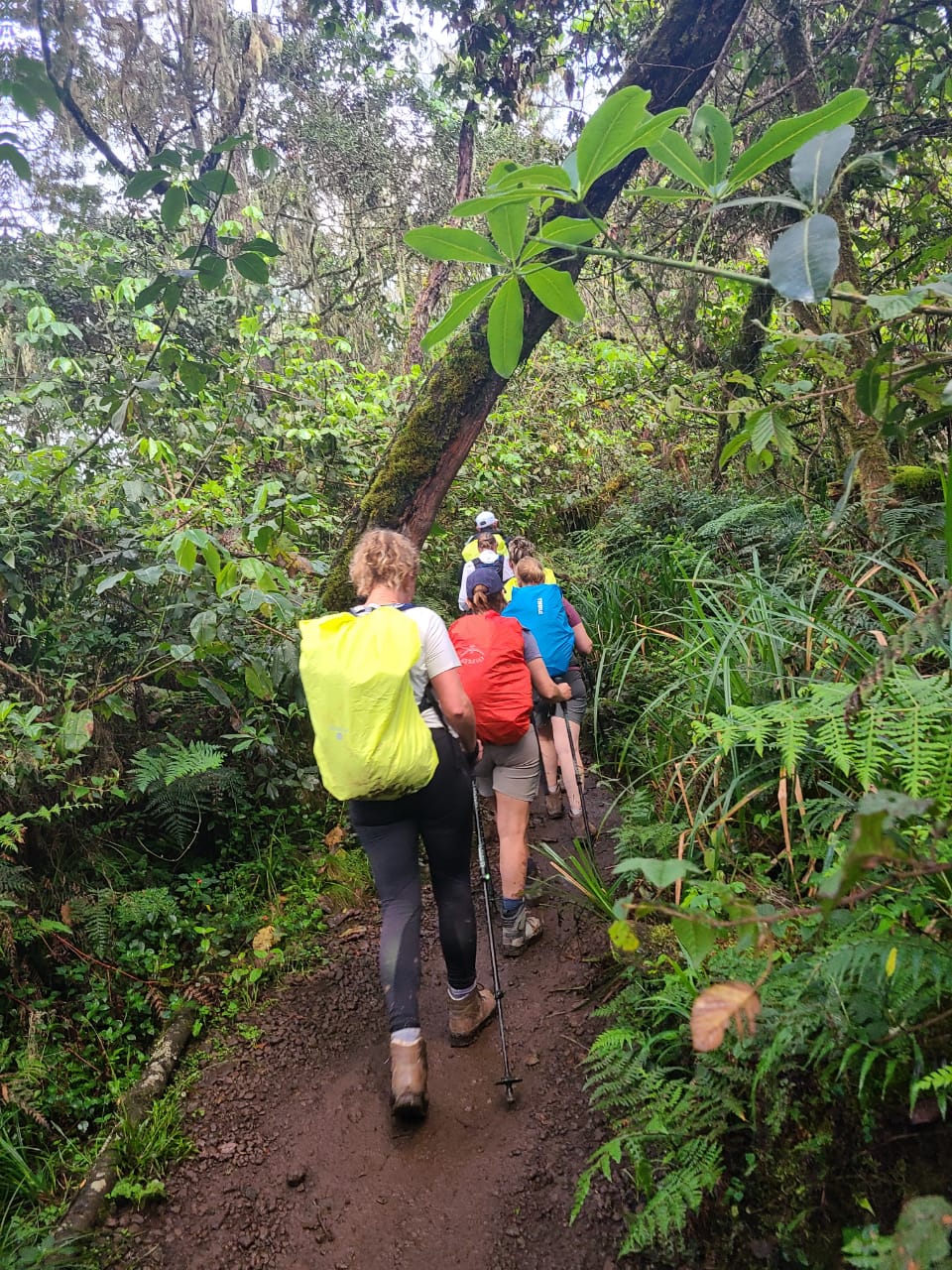
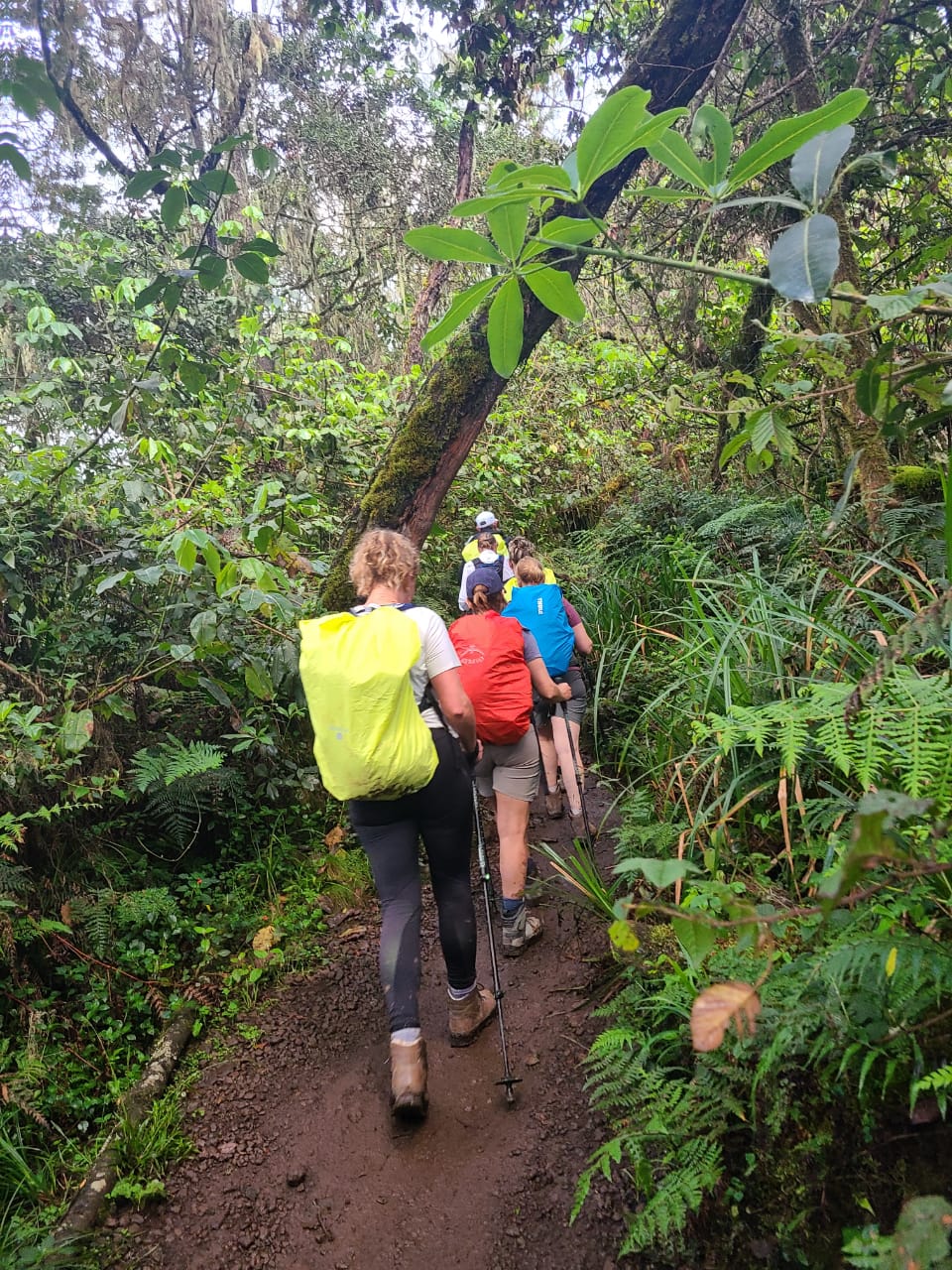
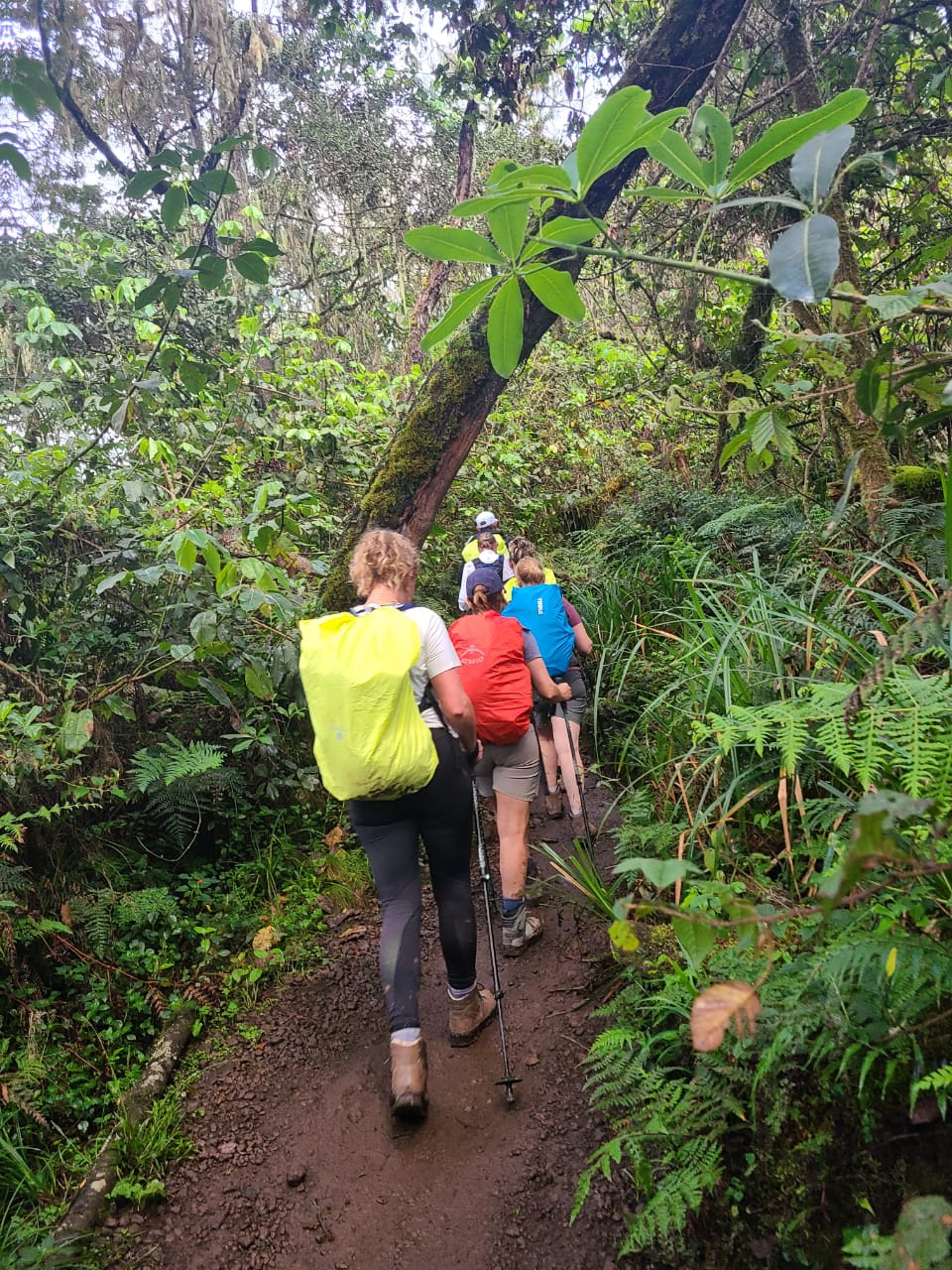
The first lesson of the Machame Route is simple: the mountain sets the pace. In the rainforest, boots meet dark earth and wet roots while a corridor of ferns closes around the trail. The group moves in single file—slowly, steadily, learning the rhythm that will carry them higher.
This is where an expedition becomes a team. Rain covers come out. Trekking poles find their timing. Conversations grow easier, then quieter, as everyone settles into the work of the climb.
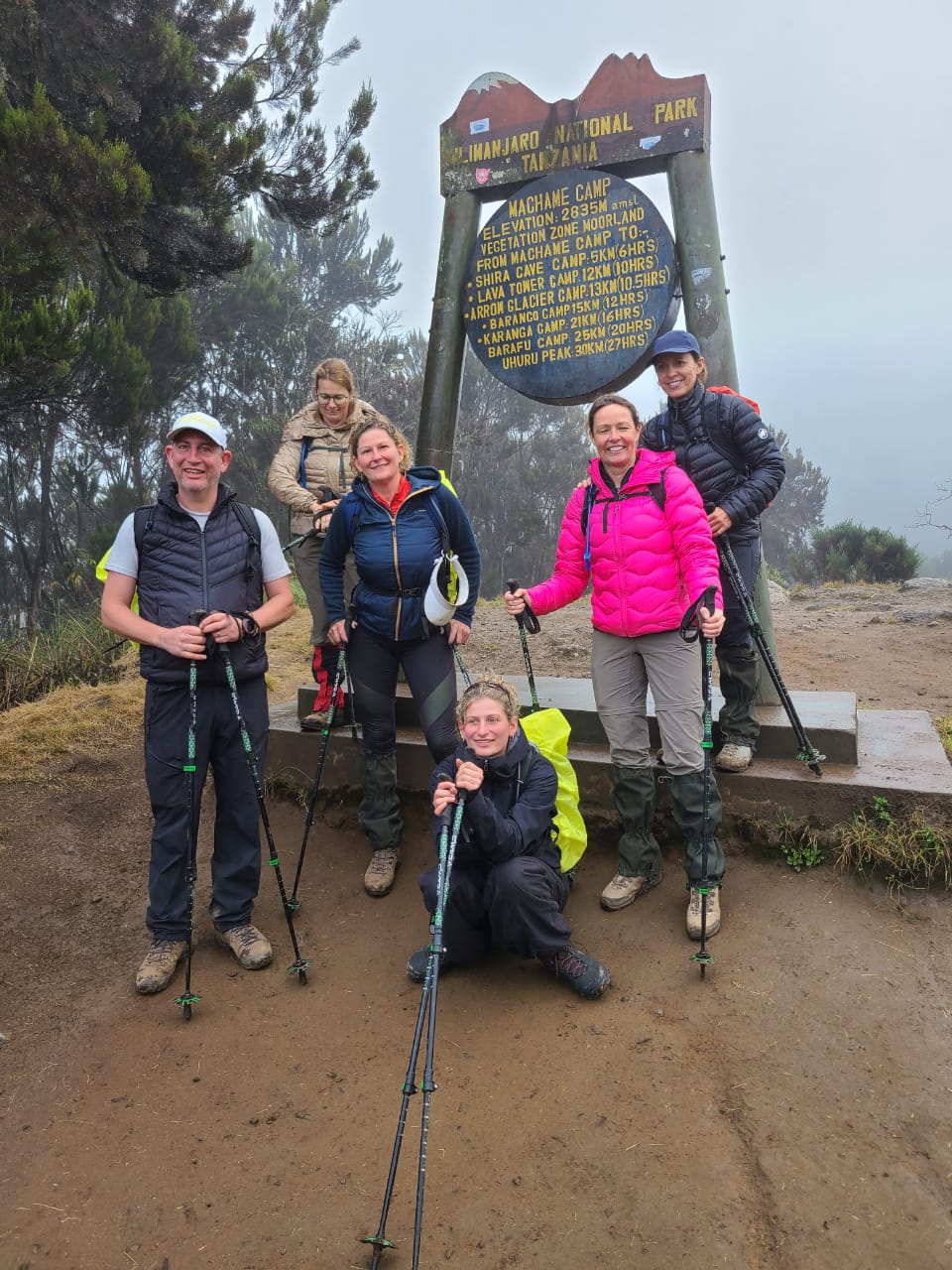
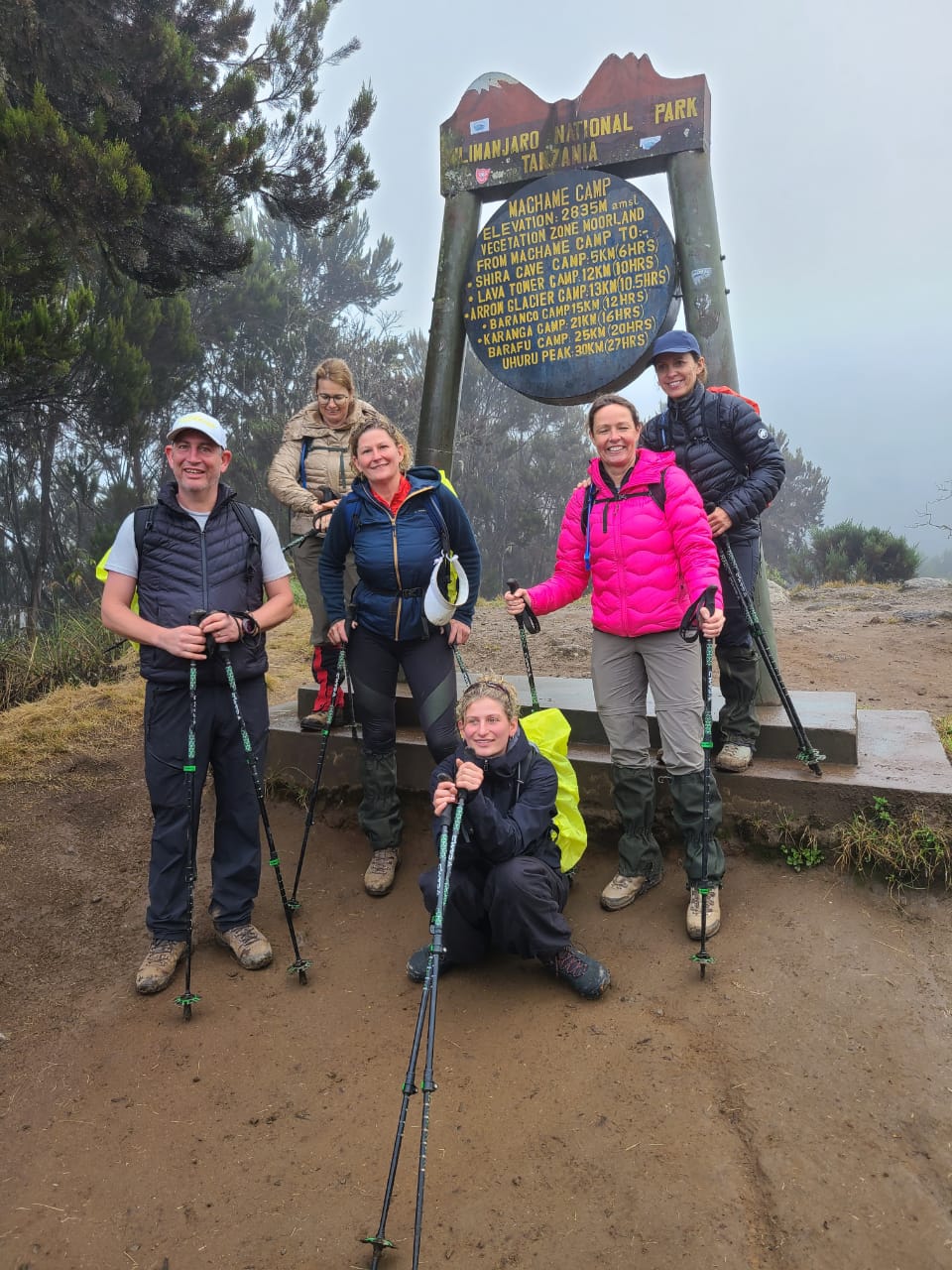
At Machame Camp, the forest begins to loosen its grip. The camp sign records the numbers—2,835 metres above sea level, with Lava Tower, Barranco, Karanga, Barafu and Uhuru still ahead—but numbers cannot fully explain what changes here. The summit stops being an idea. It becomes a sequence of real places, each earned one step at a time.
When the weather turns
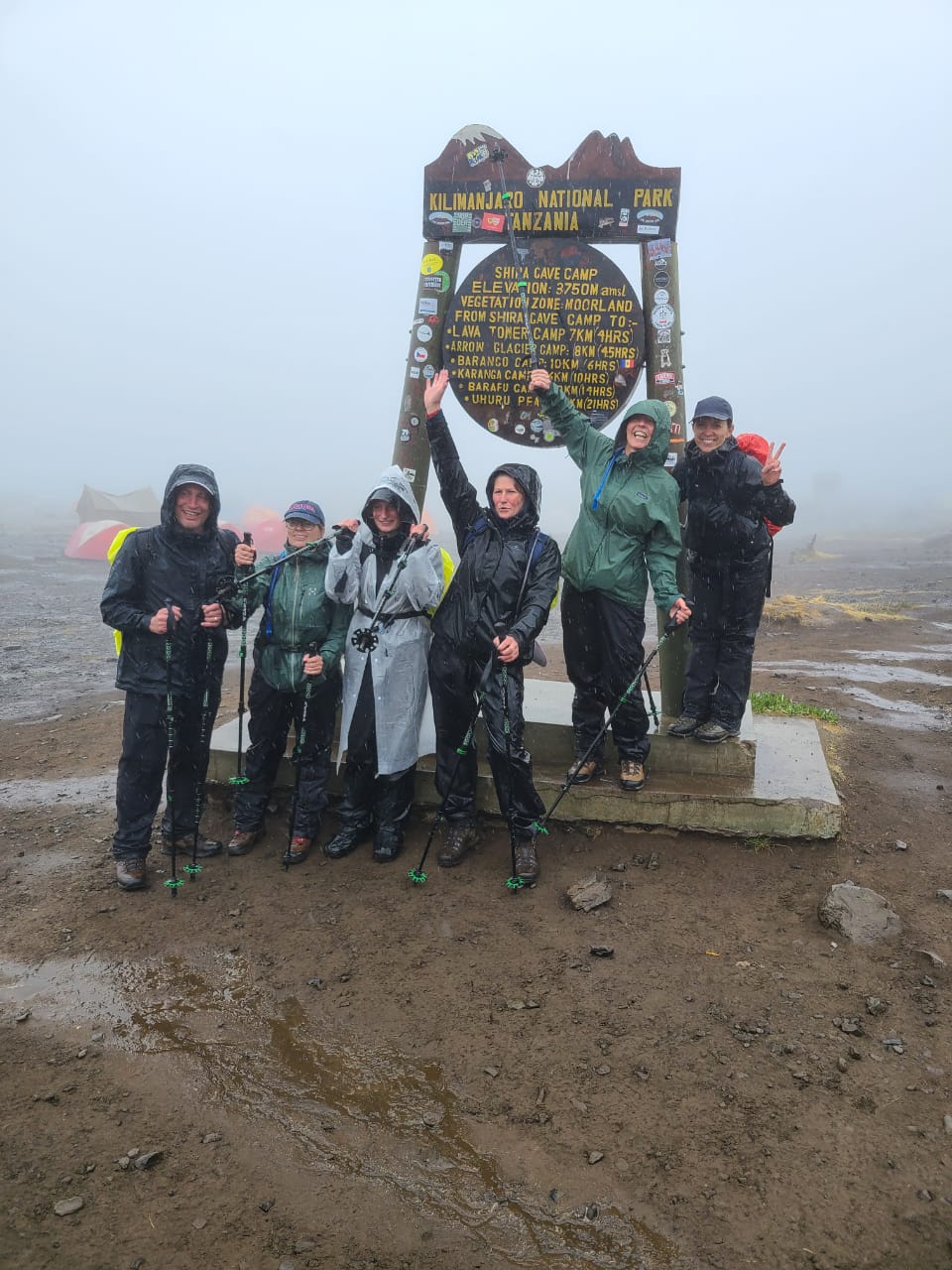
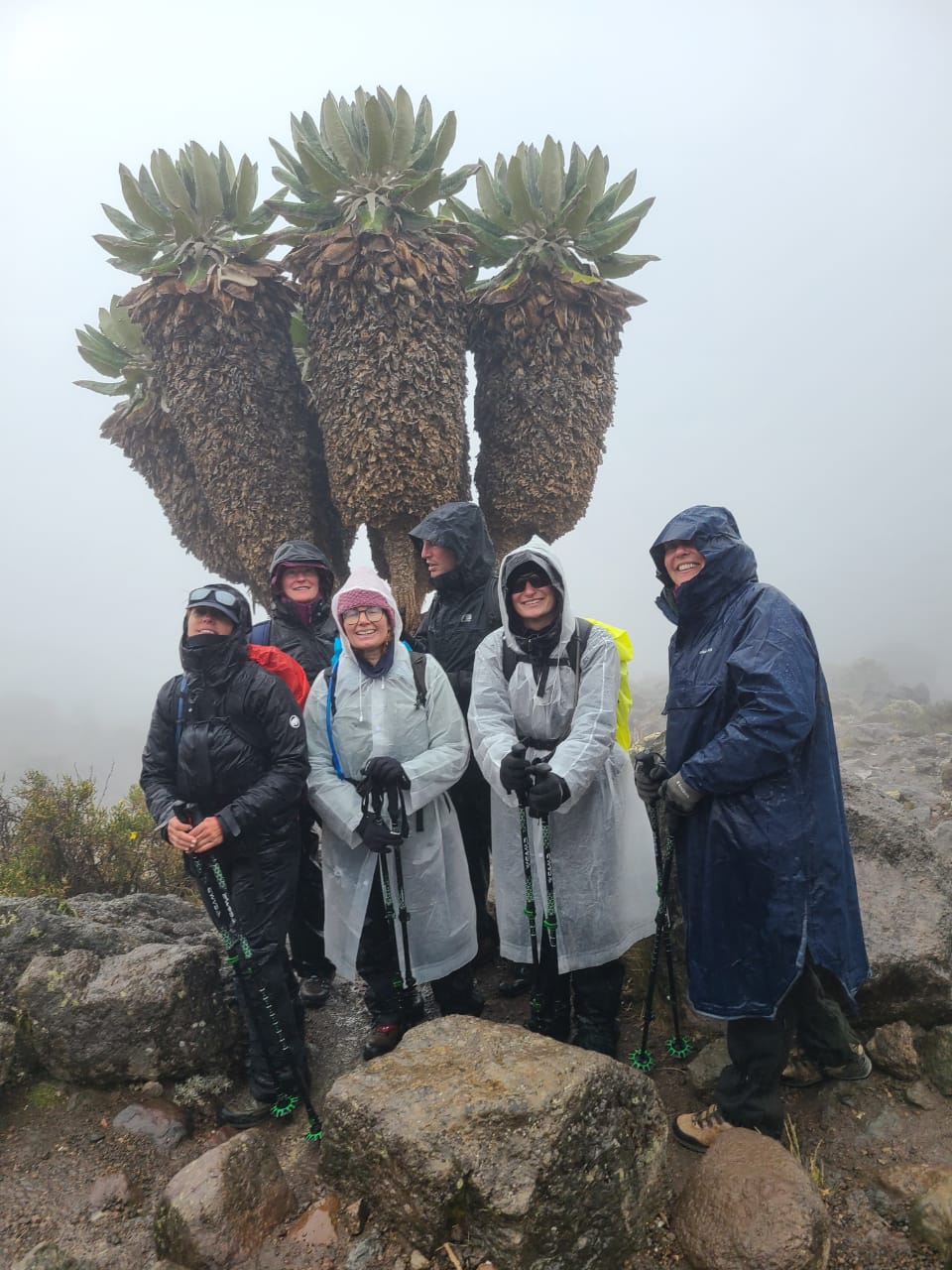
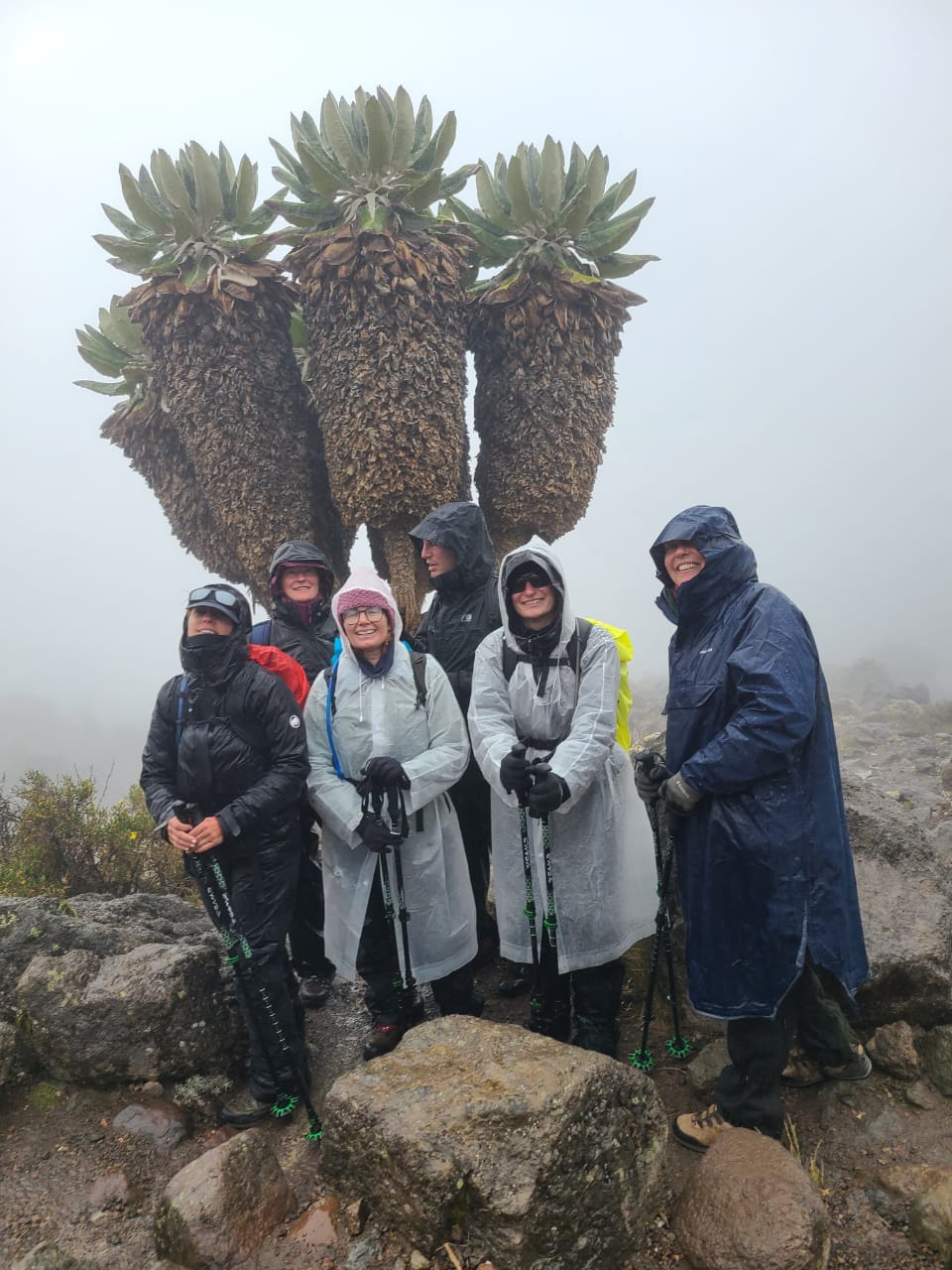
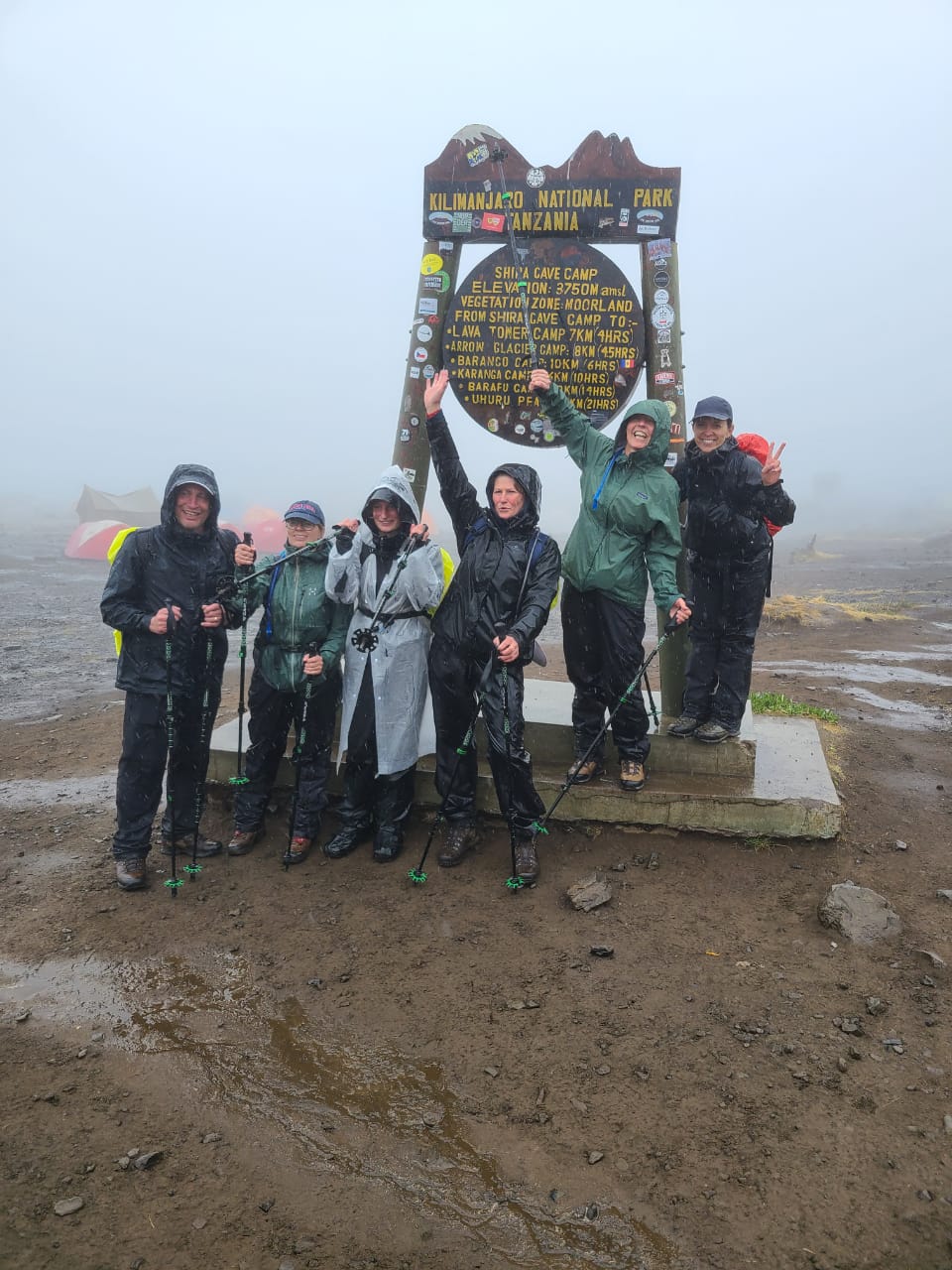
Higher on the mountain, the rain becomes part of the story. At Shira Cave Camp, cloud erases the horizon and waterproof layers replace clear views. This is not a postcard version of Kilimanjaro—and that is precisely why the moment matters. Real mountain travel asks for patience, good equipment, attentive guides, and the willingness to keep moving without seeing the whole path ahead.
Into the alpine desert
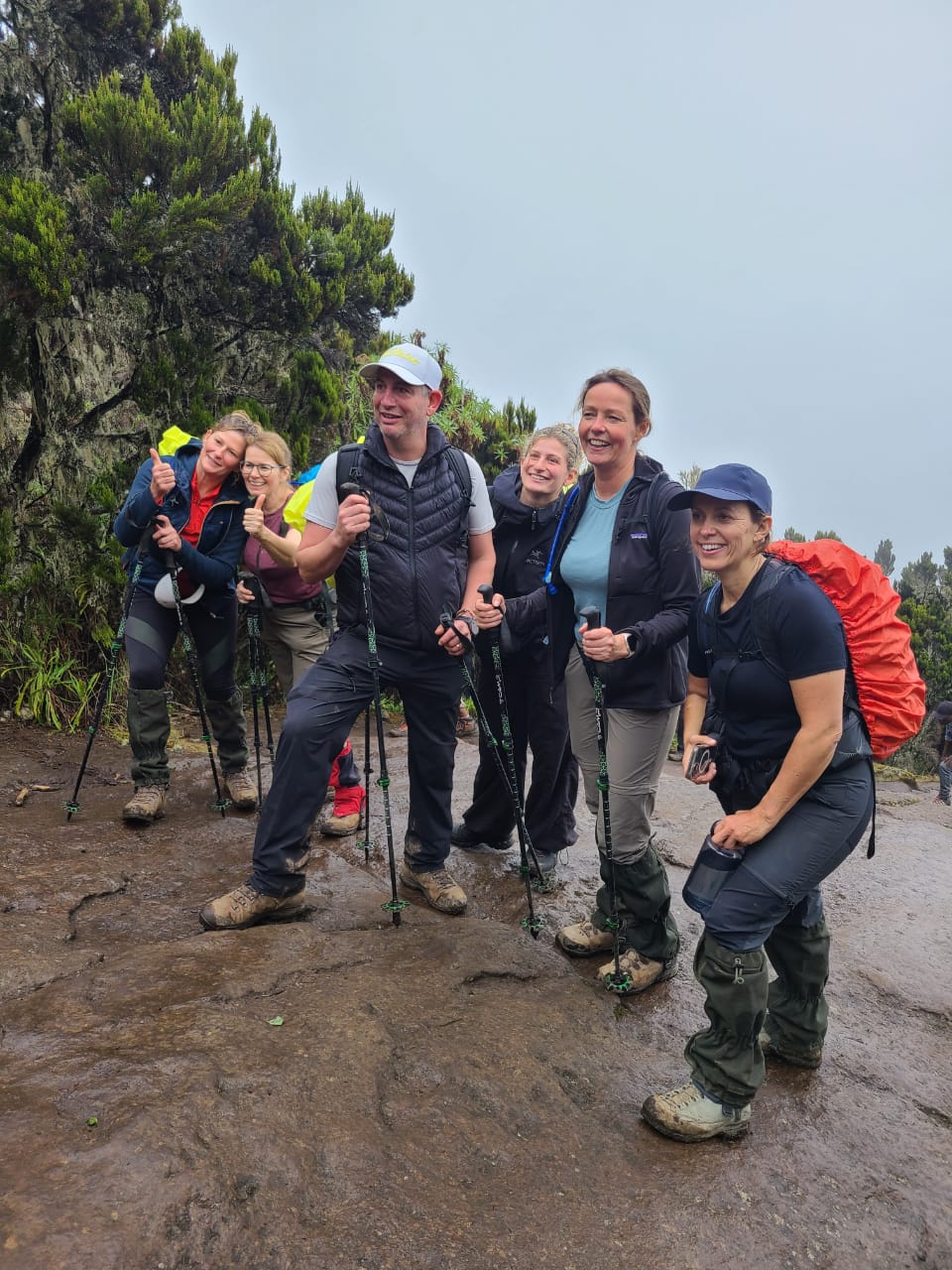
The trail eventually leaves dense vegetation behind. Rock replaces mud. The air grows thinner, and every rest, sip of water, and measured breath becomes part of the acclimatization process. Guides watch the group closely while the mountain opens into a wide, austere landscape.
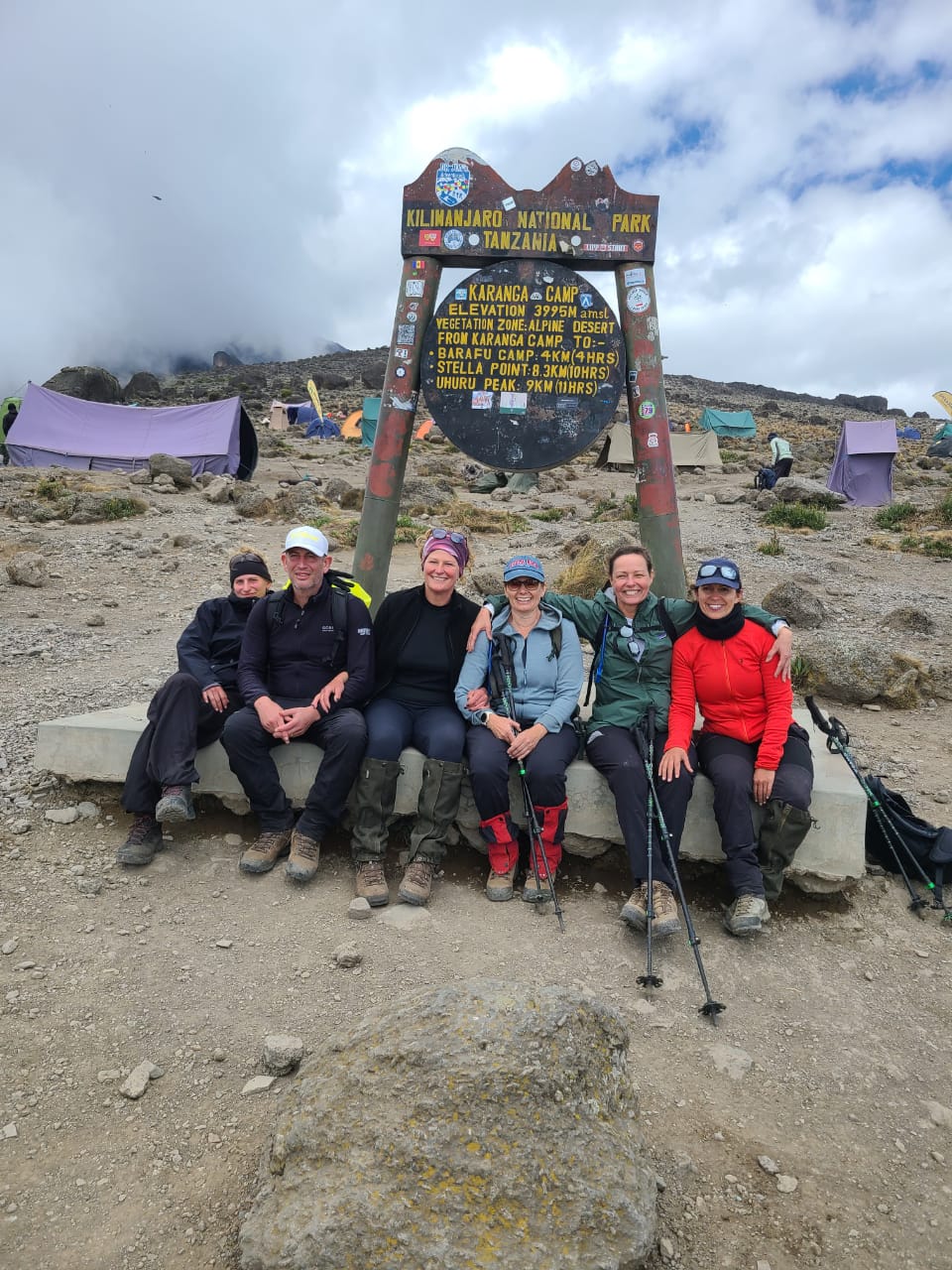
Karanga: pause before the final push
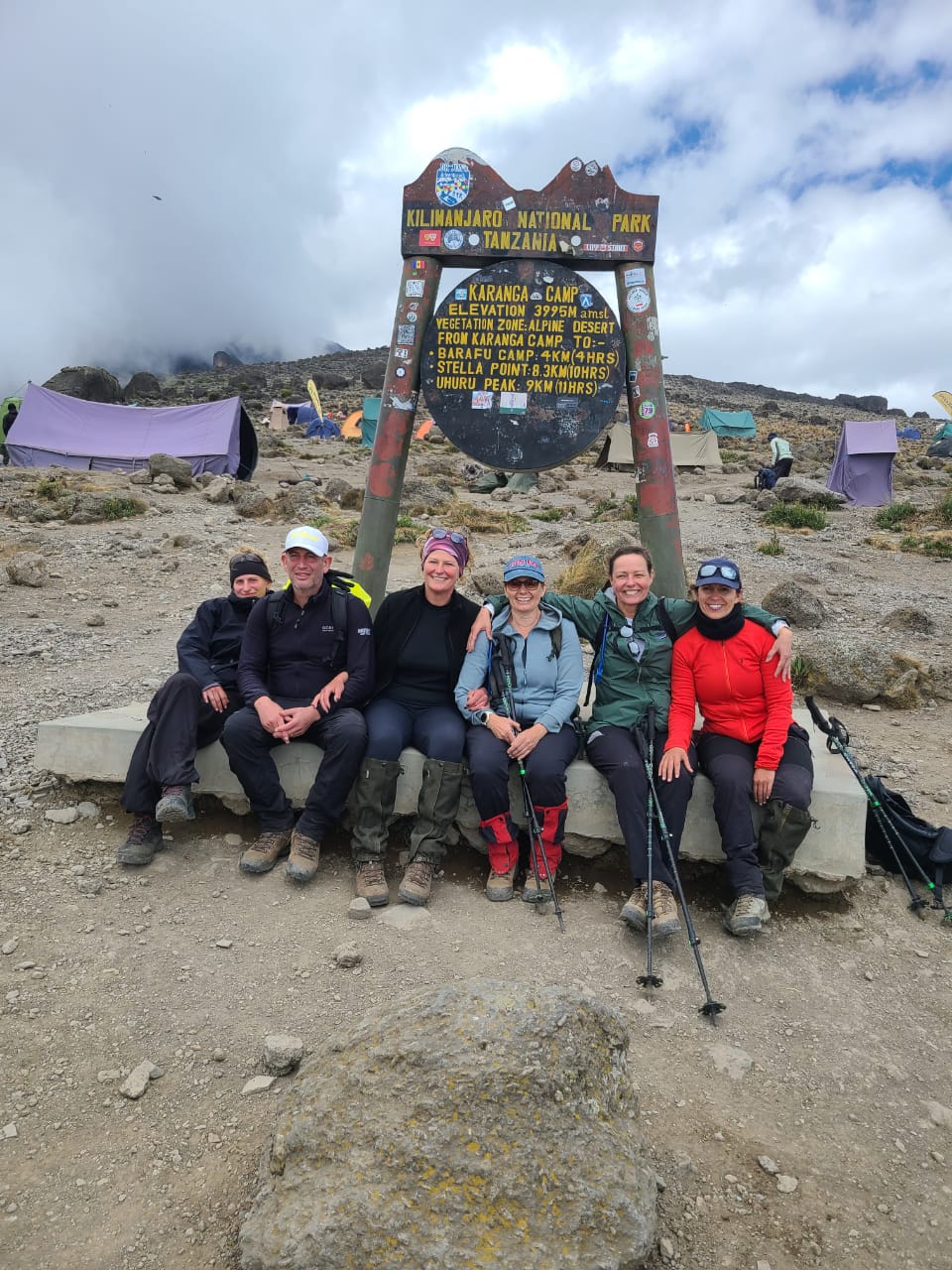
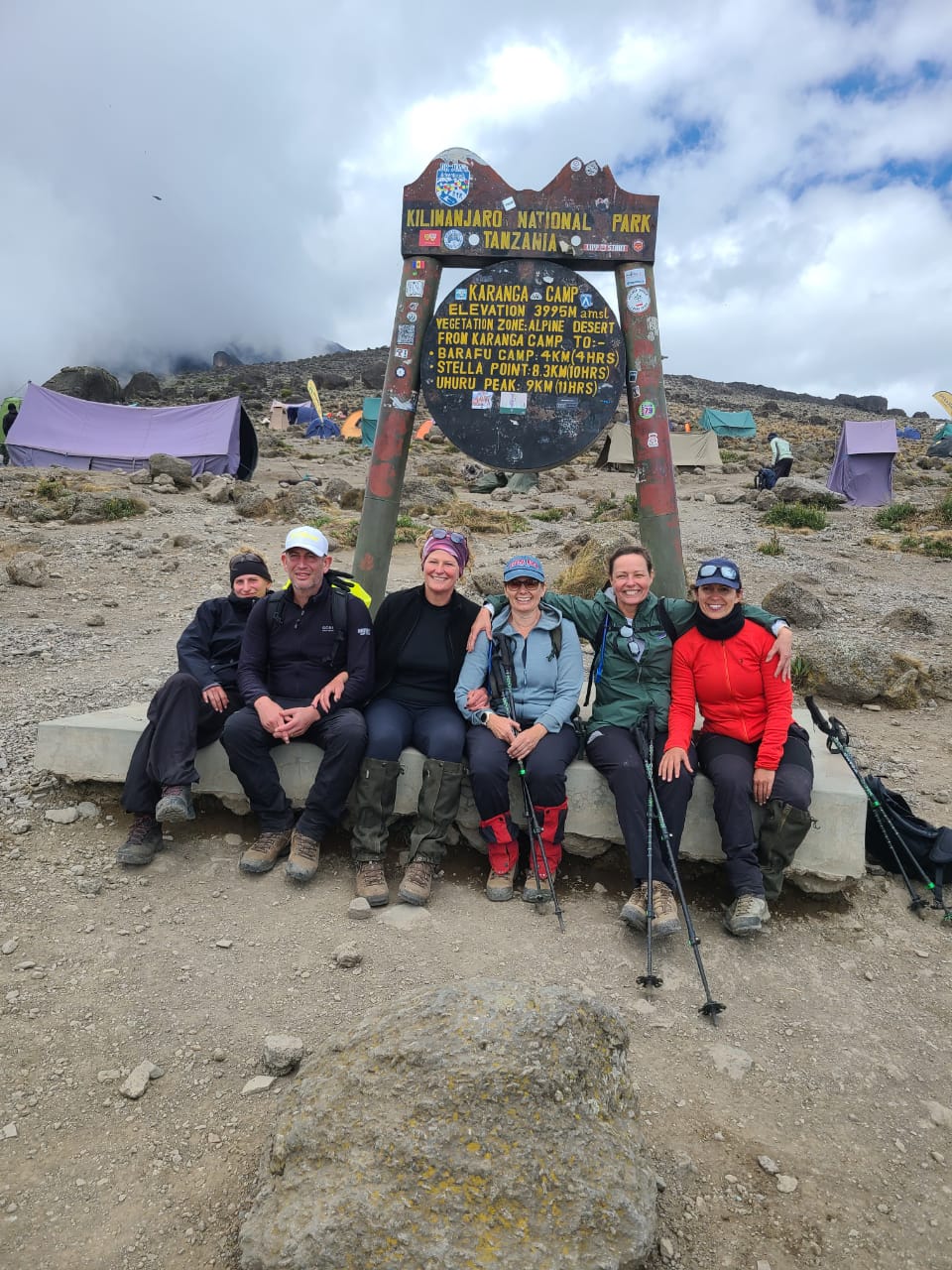
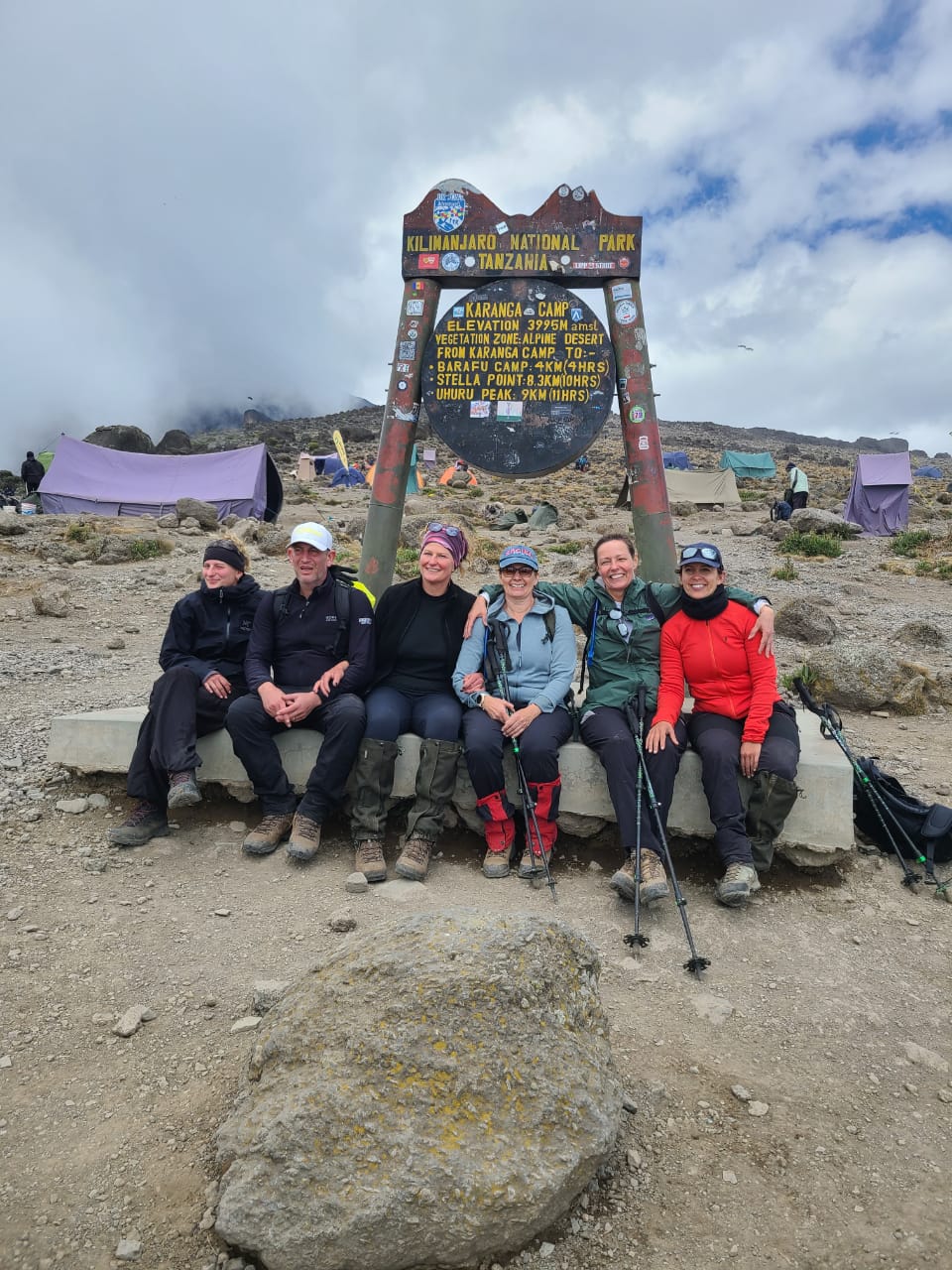
At Karanga Camp, 3,995 metres above sea level, the team pauses beneath a break in the cloud. Tents sit among volcanic rock while Barafu and the summit route wait above. The group has already crossed several worlds to reach this point—from rainforest to moorland to alpine desert—and the smiles carry more than relief. They carry the confidence built together on the trail.
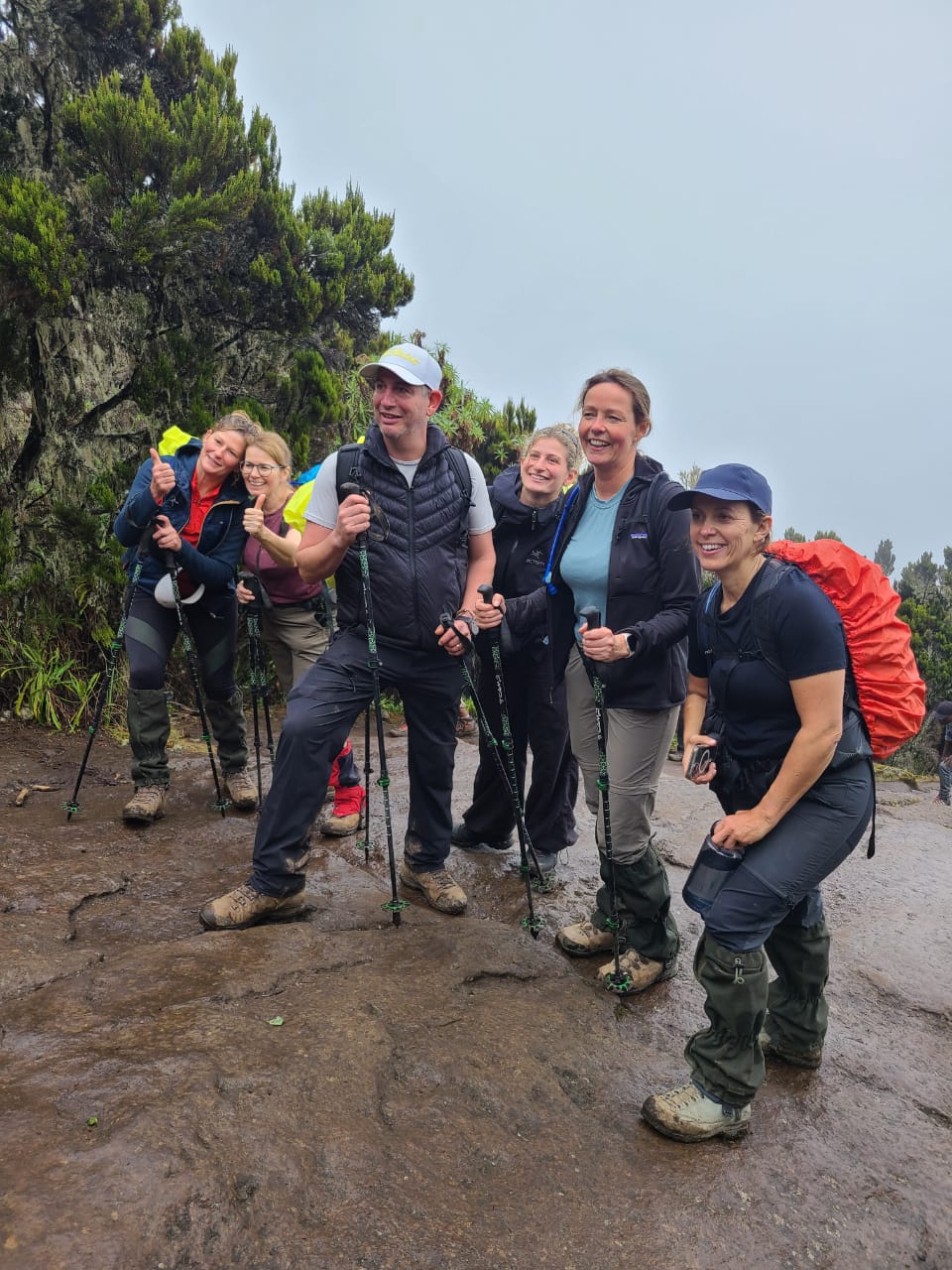
Kilimanjaro is often described by its height. On the mountain, it is remembered through smaller things: a hand offered on slippery ground, laughter in the rain, a guide’s calm voice, and the quiet realization that the team is now stronger than when it began.
Complete field gallery
Every moment from the journey
All nine photographs shared from the trail are included below, in their original sequence.
Start your own journey
Explore the Machame Route
Discover the full six-day itinerary, what is included, preparation guidance, and available departures.